The short answer: most AI video interview scoring today is based on what you say, not how you look. The best-documented example is HireVue, the largest vendor: its 2025 Explainability Statement says its AI transcribes your spoken answer, analyzes the text, and scores it against the job’s competencies, and that it does not assess “facial expressions, body language, their background and surroundings, or tone-of-voice.” HireVue announced in January 2021 that it had dropped facial analysis. Laws have followed: Illinois requires notice and consent, New York City requires bias audits, and the EU bans AI that infers emotions in the workplace. So the way to score well is the same as with a human interviewer: answer the question, with structure and specific evidence.
What happened to facial analysis
Early AI interview tools analyzed facial expressions. According to SHRM, HireVue announced in January 2021 that it had removed the facial analysis component from its assessments, having stopped using it in March 2020. Its chief data scientist said at the time that “visual analysis no longer significantly added value to the assessments,” because language analysis had become more predictive.
Regulation has since made emotion-reading tools riskier. The EU AI Act prohibits “the use of AI systems to infer emotions of a natural person in the areas of workplace and education institutions,” except for medical or safety reasons. The prohibitions have applied since 2 February 2025.
Not every vendor publishes how its tools work. If you’re not sure what a tool analyzes, ask the employer.
How AI scoring works, step by step
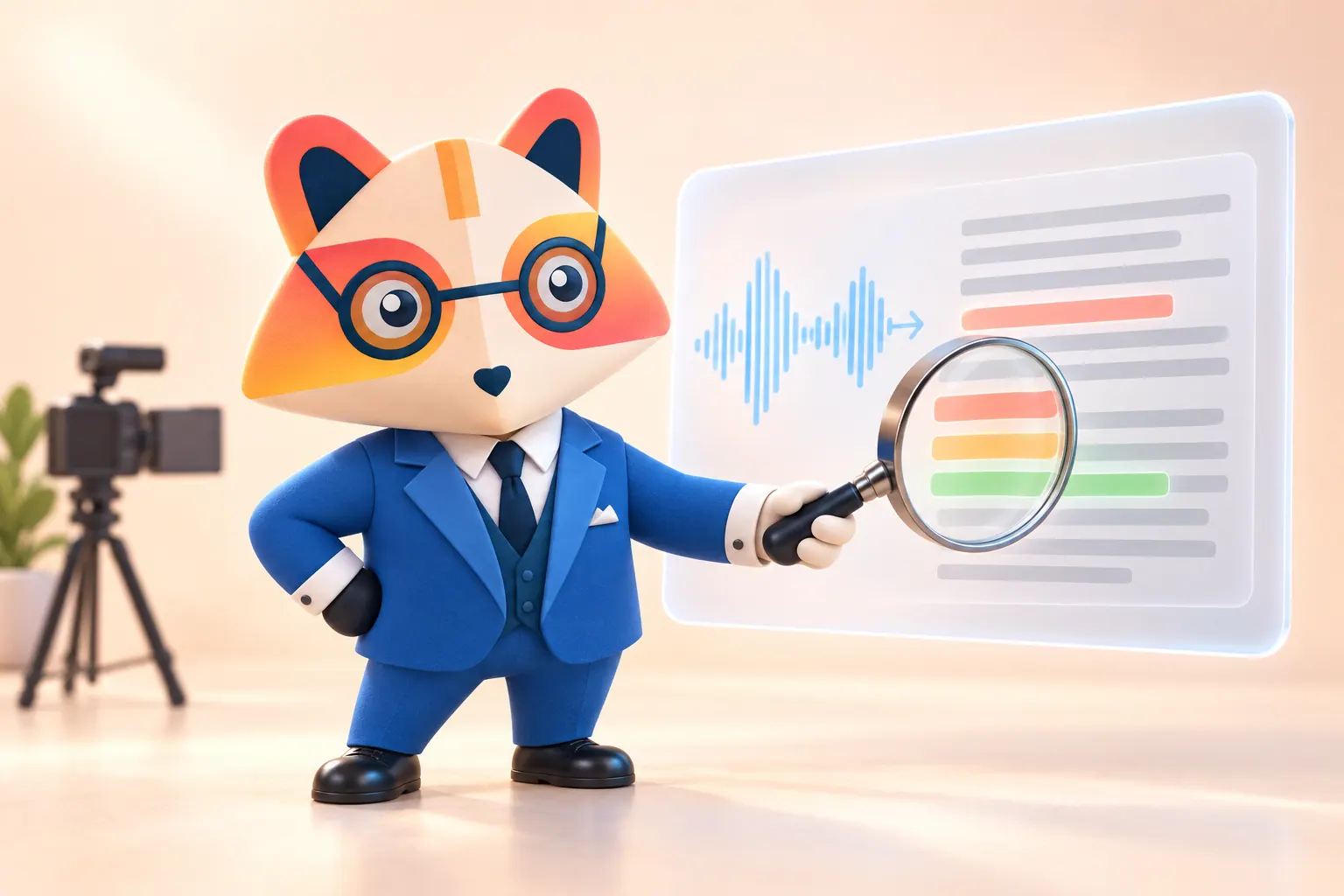
HireVue’s 2025 Explainability Statement describes three stages:
- Speech to text. Your spoken answer is transcribed. HireVue uses a third-party transcription system.
- Understanding the text. A language model interprets the meaning of your answer, not just individual keywords.
- Scoring. Your answer is scored against the competencies for the job, such as teamwork or adaptability, using models trained on how expert human raters scored answers to similar questions.
Two other details from the statement are useful to know:
- If your answer is too short or can’t be understood, it isn’t scored by AI; “instead it will be flagged for human review.”
- You can opt out of AI evaluation where the employer offers it. Recruiters then rate your answers by hand on the same rating scales. Candidates also receive a feedback report after the assessment.
Your rights
| Where | What the law requires |
|---|---|
| Illinois | The Artificial Intelligence Video Interview Act requires employers to tell you before the interview that AI may analyze it, explain how it works and what characteristics it evaluates, and get your consent. They must limit who sees your video and delete it within 30 days if you ask. |
| New York City | Local Law 144 requires a bias audit of automated employment decision tools within a year before use, public audit results, and notice to candidates. The city began enforcing it on 5 July 2023. |
| European Union | The AI Act prohibits AI that infers emotions in the workplace, except for medical or safety reasons. |
Laws vary by location and change often. If you need an accommodation for a disability, ask the employer for one before the interview.
A second example: Beatview
Disclosure: Beatview is made by Beatview, Inc., the company behind Huru. Beatview, an AI recruiting agent for recruitment agencies, publishes a simpler scheme: each recorded answer is scored for clarity, relevance and depth, and the score sits beside the recording and a written assessment of the answer. Recruiters watch the answers and decide; Beatview says its “scoring supports evaluation but does not make decisions” and tells recruiters not to reject candidates on automated scores alone. Different vendors use different labels, but the pattern is the same: the content of your answer is scored, and a person reviews it.
How to give answers that score well
Because scoring is based on the content of your answer, the same things that impress a human interviewer work here:
- Answer the actual question in your first sentence.
- Use a clear structure. For behavioral questions, the STAR method: situation, task, action, result.
- Give specific evidence: real examples, numbers and outcomes.
- Match the job’s competencies. Read the job posting and make sure your examples show the skills it lists. Language models look at meaning, so stuffing keywords won’t help.
- Speak clearly so the transcription is accurate. Test your microphone first.
- Use the full time without padding. Very short answers may not be scorable.
Remember that people may still watch your video, so dress and set up as you would for a live interview. See our guide to video interview practice and HireVue interview questions.
Myths about AI interview scoring
- “The AI reads your micro-expressions.” Not at HireVue, which dropped facial analysis (announced in January 2021), and emotion recognition in the workplace is banned in the EU.
- “It’s all about keywords.” Modern language models evaluate meaning in context.
- “You can’t find out how you’re assessed.” In Illinois employers must explain it, and some vendors publish explainability statements and give candidates feedback reports.
- “A robot makes the final decision.” The employer makes the hiring decision. HireVue’s recommended settings for employers even include turning the numeric competency score off.
How Huru scores practice answers
Huru scores practice answers on what you say: every answer is scored out of 100 on relevance, structure, specificity, impact and articulation, with the one thing to fix. After a live interview with Huru’s AI interviewer, the overall score combines your answers (70%) with conversation skills (30%): depth under follow-up, conciseness and pacing, composure under pressure, and engagement and close. The debrief gives feedback on your voice and delivery, too (pace in words per minute, thinking time, filler words and hedging per 100 words, long pauses and interruptions), and a video interview adds feedback on eye contact, posture, expressions, energy, gestures, and framing and lighting. The full breakdown is in how Huru scores answers.
Frequently asked questions
Do AI video interviews analyze your facial expressions?
How are AI video interviews scored?
Can I opt out of AI scoring?
How do I do well in an AI-scored interview?
Does keyword stuffing help in AI interviews?
Sources
- HireVue, 2025 Explainability Statement. Read on 30 September 2026.
- Beatview, AI interview software and One-way video interviews. Beatview and Huru are made by the same company, Beatview, Inc. Read on 10 October 2026.
- SHRM, HireVue Discontinues Facial Analysis Screening, Roy Maurer, 3 February 2021. Read on 30 September 2026.
- Illinois General Assembly, Artificial Intelligence Video Interview Act (820 ILCS 42). Read on 30 September 2026.
- NYC Department of Consumer and Worker Protection, Automated Employment Decision Tools. Read on 30 September 2026.
- European Commission AI Act Service Desk, Article 5: Prohibited AI practices. Read on 30 September 2026.