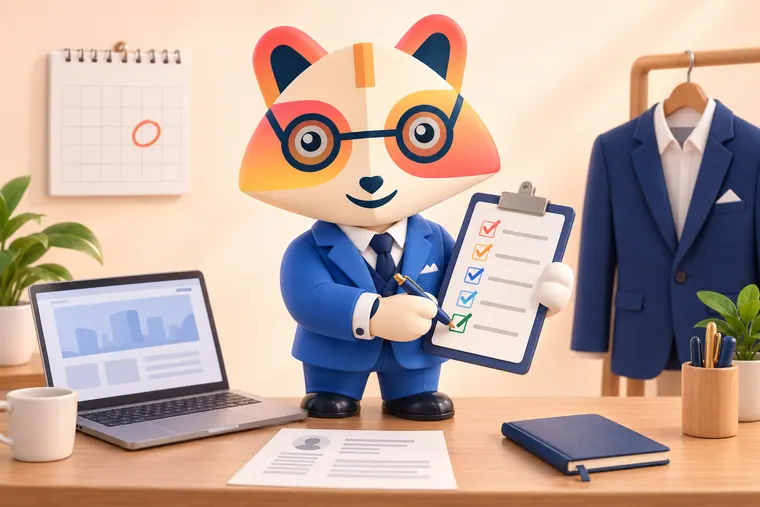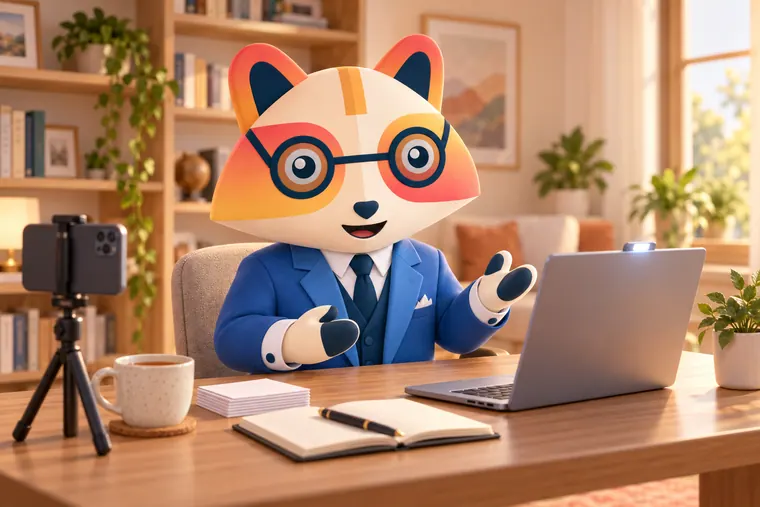
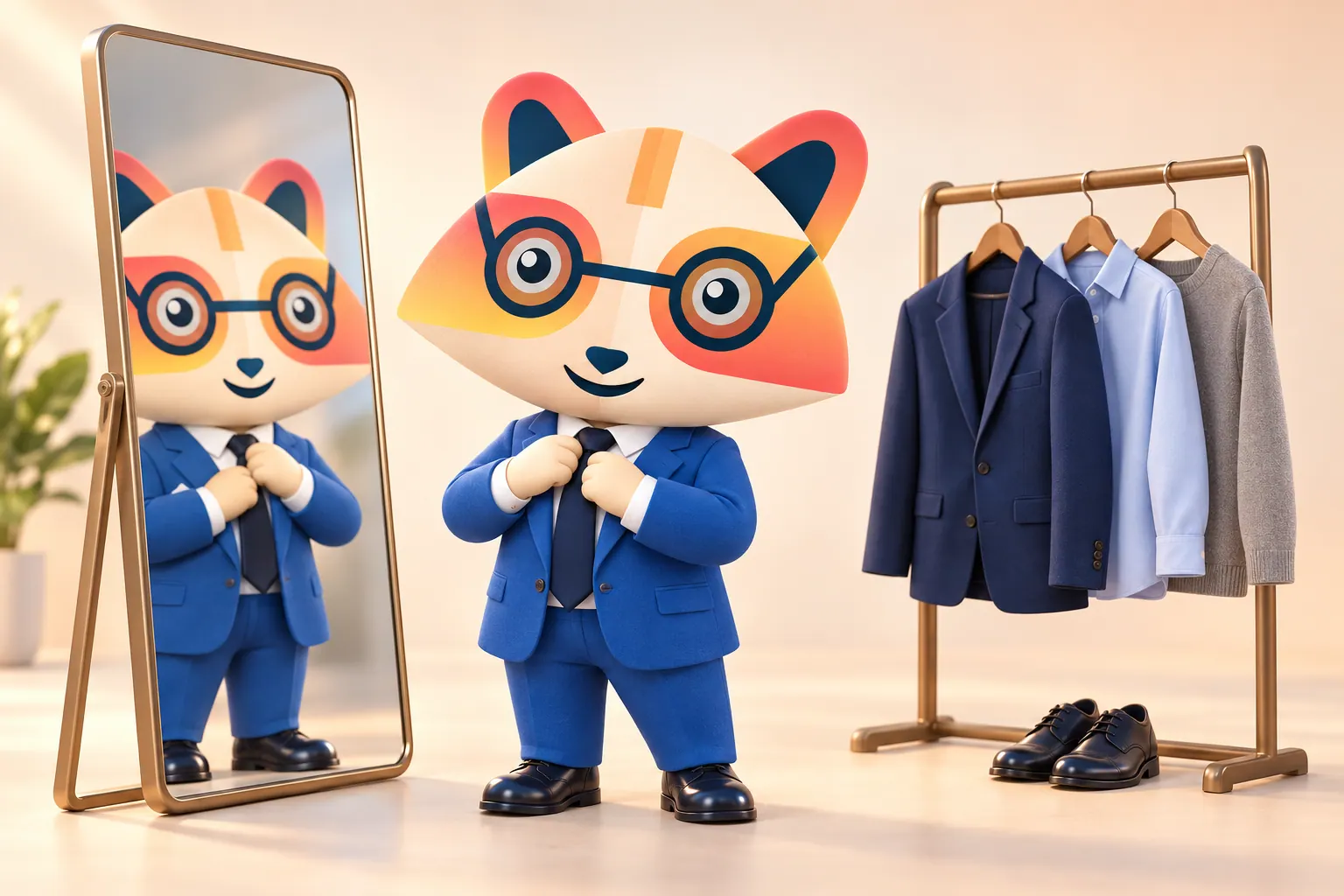
The short answer: wear one step more formal than what people wear day to day at the company. If you don’t know, business casual is the safe default for most interviews today; choose business professional (a suit or equivalent) for corporate, finance, law, government and client-facing roles. Whatever the level, clothes should be clean, pressed, well fitting and comfortable enough that you forget about them. Below is how to find out the dress code, what each level means, what to wear by industry and for video interviews, and what to avoid.
First, find out what’s expected
Virginia Tech’s career center advises that it’s “always best to research the organization, industry, and event to determine which dress code is expected or most appropriate.” Ways to find out:
- Ask. It’s normal to ask the recruiter or coordinator: “What’s the dress code for the interview?”
- Look at the company’s photos: careers page, social media, team pages.
- Ask someone who works there, or in the same industry.
Then dress one step above what employees wear day to day.
The three dress codes
Business professional
Virginia Tech describes it as “the most formal business attire” and says it’s “appropriate for most interviews,” particularly corporate, legal and business settings, education and health professions.
- A matching suit (or a tailored dress or skirt with a blazer)
- A button-down shirt or blouse, in white or a light color
- A tie, optional depending on the setting
- Closed-toe dress shoes
- Minimal, simple accessories
Business casual
In Virginia Tech’s words, “The emphasis is still on business, not casual.” Think of a suit broken into separate pieces:
- Dress pants, chinos or a skirt
- A button-down shirt, blouse, polo or fine-knit sweater
- A blazer or cardigan, optional
- Clean dress shoes, loafers or flats
Casual (smart casual)
For some startups, creative roles and hands-on jobs. Keep it polished: dark jeans or chinos without rips, a clean shirt or sweater, clean shoes. Avoid sweats, athletic wear and shorts.
What to wear by industry
| Industry | Typical interview dress |
|---|---|
| Finance, banking, law, consulting | Business professional |
| Government, public sector | Business professional or business casual |
| Sales, client-facing roles | Business professional or business casual |
| Healthcare (admin and clinical) | Business professional or business casual |
| Education (teaching) | Business casual |
| Tech and IT | Business casual or smart casual |
| Startups | Smart casual |
| Creative (design, media, marketing) | Smart casual with some personality |
| Retail, hospitality | Business casual, or a polished version of the brand’s style |
| Trades, warehouse, manufacturing | Clean, neat work clothes; business casual for office interviews |
Tech and IT interviews
Most tech companies dress casually day to day, so a suit can look out of place. Business casual or smart casual is the norm: a collared shirt or neat sweater, chinos or dark jeans, clean shoes. For IT roles in corporate, finance or government settings, go one level up. If in doubt, ask the recruiter.
Video interviews
- Dress fully, as you would in person, at least from the waist up (you may need to stand up).
- Solid colors work best on camera. Very fine stripes and small patterns can flicker.
- Avoid colors that match your background.
- Check it on camera before the call, with your lighting.
See our guide to video interview practice for setup tips.
What to avoid
- Wrinkled, stained or ill-fitting clothes
- Strong perfume or cologne
- Anything that makes noise or needs adjusting (jangling jewelry, shoes you can’t walk in)
- Very casual items: flip-flops, athletic wear, slogans on T-shirts
- Brand-new shoes you haven’t worn yet
A night-before checklist
- Outfit tried on, clean and pressed.
- Shoes clean and comfortable.
- A backup option in case of a spill.
- Bag or folder with copies of your resume and a pen.
- For video: outfit checked on camera, background and lighting set up.
Then spend the rest of your time on the part that matters most: your answers. Start with our common interview questions.
Frequently asked questions
What should I wear to a job interview?
Is business casual OK for an interview?
What should I wear to a tech or IT interview?
What should I wear to a video interview?
Can I ask what to wear to an interview?
Sources
- Virginia Tech Career and Professional Development, Professional Dress Codes. Read on 30 September 2026.