The short answer: you can practice for an interview effectively on your own if you answer out loud, record yourself, and review against a checklist. Thinking through answers in your head doesn’t count: the words, structure and timing only show up when you speak. Build a list of likely questions from the job posting, prepare a small library of stories, answer each question on camera, watch it back once, fix one thing, and repeat. Add pressure as you go: answer unseen questions, set a timer, and do at least one full mock interview before the real one.
Why solo practice works (if you do it right)
Interviews reward specific, well-structured answers delivered clearly, and those come from repetition. Google’s own interview tips, for example, advise candidates that “preparing a broad library of examples is key” for behavioral questions. You can build that library alone. What you can’t get alone is outside perspective, which is why recording yourself (and, if you like, using an AI mock interview for feedback) matters.
Step 1: Build your question list
- From the job posting: turn each key requirement into a question. “Manage stakeholders” becomes “Tell me about a time you managed a difficult stakeholder.”
- The common questions: tell me about yourself, why this role, strengths, weaknesses, a failure, a conflict, and questions for them. See common interview questions with answers.
- Role-specific questions: technical or case questions for your field.
Aim for 15 to 25 questions.
Step 2: Prepare a story library
Write six to eight short stories from your experience that you can adapt to many questions: a success with a number, a failure, a conflict, leadership or influence, a time you learned fast, a time you went beyond your role. Write each as bullet points in STAR form, not a script; scripts sound memorized.
Step 3: Answer out loud, on camera
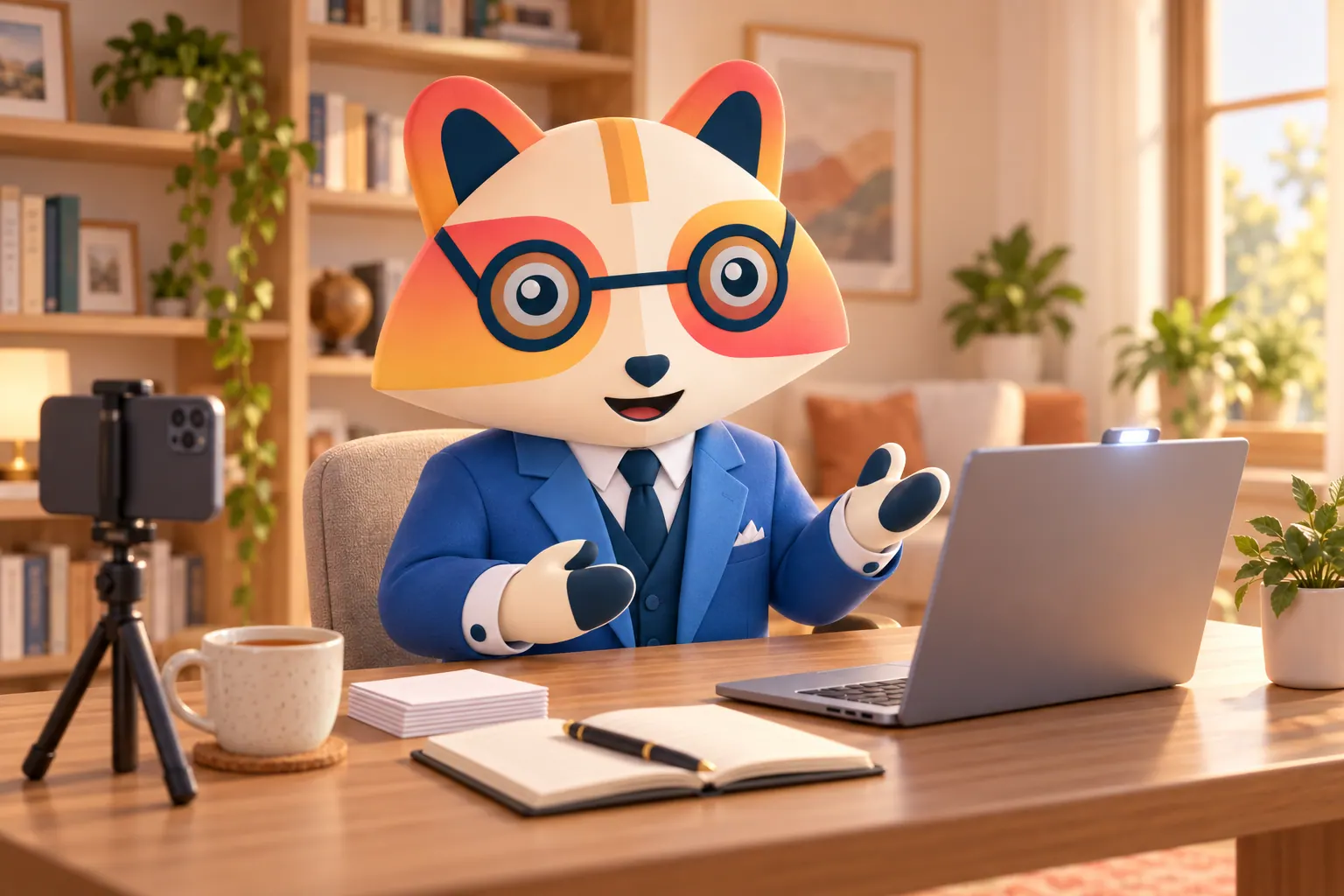
Set up your laptop or phone at eye level, read a question, and answer as if the interviewer were there. Keep stories to about two minutes. Record every answer.
Step 4: Review with a checklist
Watch each recording once (not five times) and check:
- Did I answer the question that was asked?
- Did I lead with the point, or take too long to set up?
- Was there a specific example and a result, ideally with a number?
- Was it the right length?
- One delivery habit to fix: pace, filler words, looking away, or ending weakly. See filler words to avoid.
Write down one thing to fix, then answer the same question again. The second take is where improvement happens.
Step 5: Add realistic pressure
- Shuffle questions so you don’t know what’s next.
- Use a timer and answer straight away after a short pause.
- Practice follow-ups: after each answer, ask yourself “What exactly did you do?” or “What would you do differently?”
- Do a full mock interview in your interview clothes, at the time of day of the real one, with no pauses between questions.
Step 6: Get outside feedback
Solo practice has a blind spot: you can’t easily judge your own content. Options: ask a friend to watch one recording, use your school’s or a career service’s mock interviews, or use an AI mock interview tool that scores your answers. Our mock interview guide compares the options.
A seven-day plan
| Day | Focus |
|---|---|
| 1 | Research the company and role; build the question list |
| 2 | Write your story library and your “tell me about yourself” |
| 3 | Record answers to the common questions; review and redo |
| 4 | Record role-specific and technical questions |
| 5 | Shuffled questions with a timer; practice follow-ups |
| 6 | Full mock interview; review; fix your top three issues |
| 7 | Light review only: your stories, your questions for them, logistics |
For more, see our full guide to how to prepare for an interview.
Mistakes that make solo practice less effective
- Practicing in your head instead of out loud.
- Memorizing scripts word for word; aim for key points instead.
- Watching recordings too critically and changing everything at once.
- Only practicing easy questions.
- Skipping the questions you’ll ask them and the logistics. See questions to ask the interviewer.
For video interviews
If the real interview is on video, practice in the same setup: camera at eye level, light in front of you, and a quiet background. See our video interview practice guide.
Frequently asked questions
How can I practice for an interview by myself?
Is it good to record yourself practicing interview answers?
How many times should I practice an interview answer?
How long before an interview should I start practicing?
Can AI help me practice for interviews alone?
Sources
- Google Careers, Interview tips. Read on 2 October 2026.