How to Optimize Your Resume for AI Without Losing Human Appeal
 Apr 25,2026
  By Elias Oconnor

Practice unlimited interviews, get instant AI feedback, and boost your confidence. Start practicing for free today at app.huru.ai
Why Hybrid ATS Resumes Are the New Standard 🚀
If your resume isn’t optimized for both AI systems and human recruiters, you’re likely missing out on job opportunities—often before you even have a chance. Today’s hiring landscape is powered by Applicant Tracking Systems (ATS) that scan, rank, and filter candidates before a human ever looks at your application.
Hybrid ATS resumes are designed to pass AI screening and impress people. In this guide, you’ll learn how to create a resume that effortlessly navigates both worlds, maximizing your chances to land interviews in 2024 and beyond.
- ⏩ AI resume optimization: Tactics to beat the bots and get noticed.
- ⏩ Human-centric design: Formatting and storytelling tips that spark interest.
- ⏩ Hybrid strategies: The best of both worlds for modern job seekers.
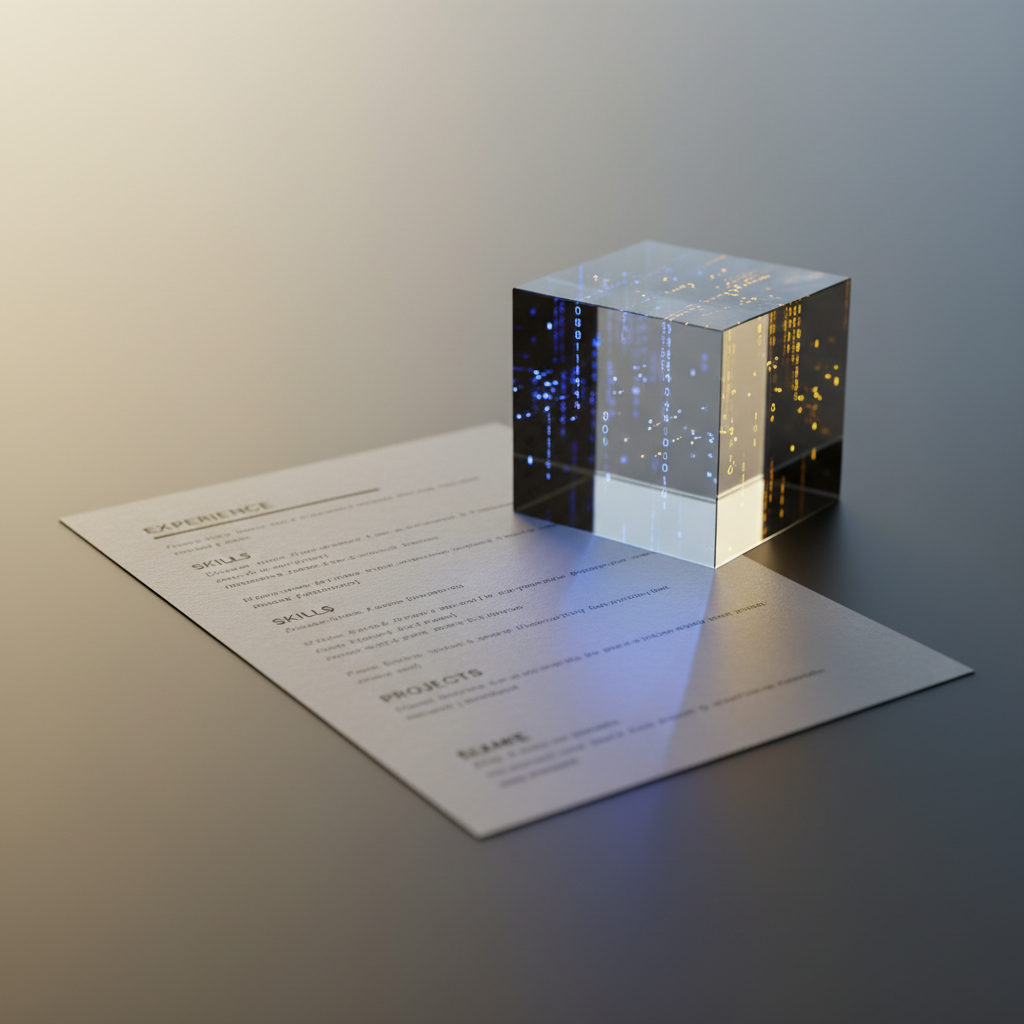
💡 Key Takeaway
A hybrid ATS resume is your best shot in today’s tech-driven job market. You need to please both algorithms and actual people to secure interviews.
How ATS Robots & Recruiters Read Your Resume (and Why It Matters)
Modern Applicant Tracking Systems (ATS) are more than simple databases—they use natural language processing and AI to scan, parse, and rank resumes. They eliminate unqualified candidates and create shortlists for human reviewers. Here’s what happens when you click “submit”:
- Parsing: The ATS breaks your document into sections (work history, education, skills, etc.).
- Keyword Matching: It checks for job-specific keywords found in the job description.
- Ranking: Resumes with the most relevant keywords and achievements rise to the top.
- Human Review: Only top-ranked resumes make it to a human recruiter—often less than 25%.
Humans, on the other hand, scan for clarity, impact, and personality—often making a decision in under 7 seconds. Hybrid ATS resumes must satisfy both: the machine’s need for structure and keywords, and the human’s desire for compelling stories and clean design.
Crafting the Hybrid ATS Resume: Step-by-Step Blueprint 🛠️
Let’s break down how to construct a resume that’s both AI-friendly and human-centric—using tactics that Huru.ai recommends for maximum results.
- Keep it simple & structured: Use standard section headers (Work Experience, Skills, Education).
- Integrate keywords naturally: Analyze job descriptions and weave key terms into your bullet points and summary.
- Focus on achievements: Quantify impact with numbers (e.g., “Increased sales by 28%”).
- Balance design: Avoid complex tables, images, or graphics that confuse ATS, but use subtle formatting (bold, italics, whitespace) for humans.
- Save as PDF (unless told otherwise): Some ATS can’t read PDFs—check the employer’s instructions!
Want help optimizing your resume instantly? Read our ATS keywords guide or try Huru’s resume analyzer for tailored feedback.
💡 Key Takeaway
Hybrid resumes combine strategic keywording and story-driven formatting for best results. Don’t pick one side—blend both!
AI Resume Optimization: Pro Tips for 2024 & Beyond 🤖
AI resume optimization isn’t just about stuffing keywords—it’s about showing relevance and impact. Follow these expert strategies:
- Use exact phrasing: Mirror the language found in the job posting. If the ad says “project management,” use that exact phrase.
- Match job titles: Align your listed roles to the job description (e.g., “Customer Success Manager” vs. “Client Relations Lead” if appropriate).
- Include hard skills and certifications: List tools, software, and credentials the job specifies.
- Show progression: Highlight promotions and increasing responsibility—AI can interpret career growth.
- Leverage tools: Use Huru’s keyword tools and scoring features to benchmark your resume against job ads.
These optimizations not only boost your ATS ranking, but also make your achievements stand out to human readers.
Formatting for Human Eyes 👀: How to Impress Recruiters
Even the most AI-optimized resume can flop if it’s ugly, dense, or confusing. Here’s how to format for REAL people:
- ✨ Use clear section headings with legible fonts (Calibri, Arial, Helvetica).
- ✨ Whitespace is your friend: Leave breathing room between sections and bullets.
- ✨ Bullet points over paragraphs: Make accomplishments easy to skim.
- ✨ Limit to 1-2 pages: Recruiters rarely read more than that.
- ✨ Strong summary: Write a 2-3 sentence pitch that hooks attention.
For inspiration, check out our best hybrid resume templates. Bonus: Most are ATS-friendly and proven to impress!
Hybrid Resume FAQs: Your Top Questions Answered 🔍
Let’s address common user questions about AI resume optimization and hybrid ATS resumes, so you walk away prepared and confident.
- Q: How do I know if my resume is ATS-friendly?
A: Paste your resume into a plain text editor—if it displays cleanly, it’s likely ATS-friendly. Or, use Huru’s instant scoring to check automatically. - Q: Will a visually designed resume hurt my chances?
A: If it uses non-standard fonts, graphics, or columns, yes. Stick to simple layouts for online applications; bring the creative version for networking events! - Q: What’s the #1 mistake job seekers make?
A: Ignoring keywords and customizing for each job. Always tailor your resume! - Q: How often should I update my resume?
A: Every quarter, or after any significant achievement.
Have more questions? Explore our guide to showcasing your hidden strengths.
Hybrid ATS Resume: Table of Must-Have Elements
See Hybrid ATS Optimization in Action (Video)
Watch this short explainer to see how recruiters and ATS systems evaluate resumes, and how to make yours stand out for both audiences:
💡 Next Steps: Take Action!
Create your hybrid ATS resume now—then upload it to Huru.ai for instant feedback on AI and human readability. Don’t leave your next interview chance to an algorithm alone!
About the Author
Elias Oconnor is a content writer at Huru.ai, passionate about career technology, job search strategy, and helping people build unshakeable interview confidence. His mission: to empower every job seeker with data-driven tools and actionable insights.
