

TOP 20+ Microservices Interview Questions And Answers [UPDATED 2025]
 Oct 10,2022
  By Elias Oconnor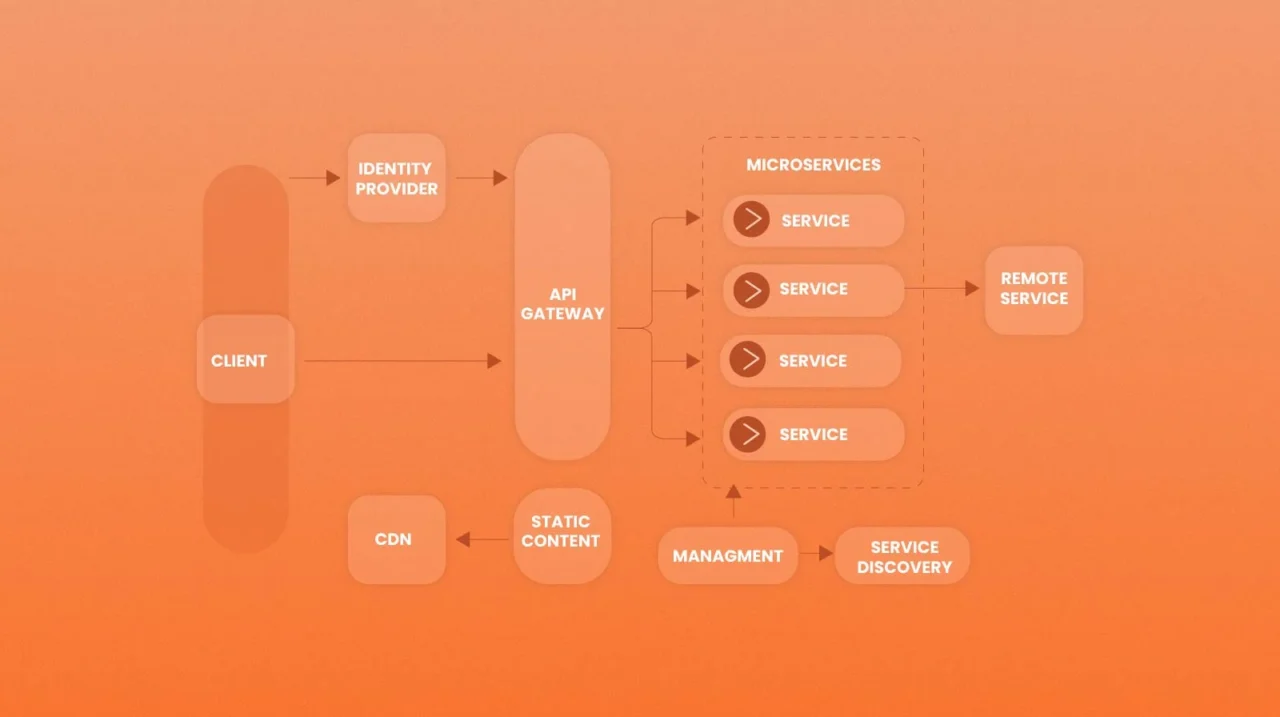

Supercharge Your Microservices Interview Prep 🚀
Practice unlimited mock interviews tailored for microservices roles on Huru.ai — get instant AI feedback on your technical and communication skills, absolutely free! Start gaining real confidence now.
Breaking Down the Basics: What Every Interviewer Expects
Microservices have revolutionized how we build scalable, resilient software. But what exactly are they? Let’s dive into foundational knowledge every candidate—fresher or seasoned architect—must master to tackle microservices interview questions with confidence:
- What are Microservices? Microservices is an architectural style that structures a software application into small, autonomous services, each responsible for a specific business functionality.
- Monolithic vs. Microservices: Monolithic applications are single, self-contained units. Microservices break the system into independent, deployable modules, making scaling and maintenance easier.
- Benefits: Scalability, tech stack independence, easier debugging, and resilience.
Drawbacks: Increased complexity in deployment and inter-service communication, data consistency challenges.
Key Concepts in Microservices: From Service Discovery to API Gateways
To ace your microservices interview, you need to understand these pivotal concepts:
- Service Discovery: How microservices dynamically find each other on a network, often using tools like Eureka or Consul.
- Eventual Consistency: Unlike monoliths, microservices often sacrifice immediate consistency for availability and scalability.
- API Gateway: Central entry point for client requests, managing security, routing, and protocol translation. Examples: Kong, Spring Cloud Gateway.
Inter-Service Communication: The Heart of Microservices
Communication is the backbone of any microservices architecture. Interviewers want to see you understand:
- Protocols: REST, gRPC, message brokers (RabbitMQ, Kafka), and when to use them.
- Handling Failures: Timeouts, retries, circuit breaker patterns. Discuss how to avoid cascading failures and ensure reliability.
Diving into Advanced Architectures: Patterns & Compositions
Advanced patterns show your depth of knowledge. Be prepared for questions on:
- Saga Pattern: Managing distributed transactions across multiple services.
- CQRS (Command Query Responsibility Segregation): Separates read/write operations for scalability.
- API Composition: Aggregating data from multiple microservices for client-facing APIs.
Security and Authentication in Microservices: What You Must Know
Security is paramount! Expect frequent questions about:
- OAuth2 & JWT: How tokens secure communication between services and clients.
- Securing Endpoints: API gateway security, HTTPS, and network segmentation.
When Things Go Wrong: Handling Failures
No system is infallible. Top candidates know how to respond to failures:
- Circuit Breaker Pattern: Prevents repeated failures from overwhelming the system.
- Downtime Handling: Blue-green deployments, canary releases, and fallback strategies.
Scaling and Performance Optimization: Go Big, Stay Fast
Scalability is a key advantage of microservices. Showcase your expertise in:
- Vertical vs. Horizontal Scaling: Pros, cons, and real-world examples.
- Monitoring & Logging: Centralized logging, Prometheus, Grafana, and best practices to ensure system health.
Behavioral Scenarios: Lessons from Real-Life Situations
Employers not only assess your technical skills but also your problem-solving and teamwork abilities. Prepare for questions like:
- Describe a Microservice Failure: How did you identify the root cause? What communication and mitigation steps did you take?
- Team Collaboration: Share an example of resolving inter-service data inconsistencies through cross-team cooperation.

Best Practices for Microservices Development
Demonstrate your commitment to quality and maintainability by discussing:
- CI/CD Pipelines: Automating deployment for faster feedback and safer releases.
- Domain-Driven Design (DDD): Aligning services with business domains for clarity and agility.
- Bounded Contexts: Keeping service responsibilities clear and reducing dependencies.
Career Path and Growth Opportunities in Microservices
Embracing microservices can be a game-changer for your career:
- Key Skills: Distributed systems knowledge, DevOps, cloud-native architecture.
- Career Impact: Opens doors for specialized roles (e.g., Cloud Engineer, DevOps Lead, Solutions Architect).
Explore more about backend interview preparation in our Backend Developer Interview Questions Master The Server Side With Huru Ai guide.
Preparing for Microservices Interviews: Tips and Tricks
Stand out by following these expert strategies:
- Practice explaining microservices concepts in simple terms—clarity is king!
- Frame your answers using the STAR (Situation, Task, Action, Result) technique.
- Leverage Huru’s AI-powered mock interviews to get instant feedback and identify areas for improvement.
- Avoid common pitfalls: overcomplicating answers, skipping trade-offs, or ignoring real-world failure scenarios.
Real-World Examples and Case Studies
Use these examples in interviews to demonstrate applied expertise:
- Netflix: Pioneer in microservices for streaming scalability.
- Amazon: Migrated from a monolith to thousands of microservices to handle global e-commerce operations.
- Uber: Uses microservices for real-time ride management and dynamic pricing.
💡 Key Takeaway
Hiring managers value candidates who combine technical mastery with real-world problem solving and communication skills. Demonstrate both for maximum impact in your interviews!
20+ Essential Microservices Interview Questions And Answers (2025 Edition)
| Question | Expert Answer (2025) |
|---|---|
| What is a microservice? | An architectural unit that is independently deployable, loosely coupled, and focused on a single business capability. |
| Difference between monolithic and microservices architecture? | Monolithic = single unit, Microservices = distributed, modular, scalable services communicating over a network. |
| What is service discovery? | Dynamic registration and lookup of services so that microservices can interact without hard-coded endpoints. |
| How do microservices communicate? | REST APIs, message brokers, RPC protocols—choice depends on use case, consistency, and performance needs. |
| Explain the circuit breaker pattern. | Protects services from repeated failures by detecting faults and short-circuiting further requests temporarily. |
| What is eventual consistency? | System achieves consistency over time, not instantly, to ensure high availability in distributed systems. |
| What are API gateways? | A gateway that handles routing, security, and protocol translation for client requests to microservices. |
| How do you secure microservices? | By implementing OAuth2, JWT, HTTPS, token validation, and securing inter-service communications. |
| What is the Saga pattern? | A pattern for managing distributed transactions with compensating actions when failures occur. |
| What is CQRS? | A pattern that separates read and write operations for improved scalability and flexibility. |
| Describe blue-green deployment. | Two production environments—one live, one idle. Switch traffic to new version for zero downtime deployment. |
| Vertical vs. horizontal scaling? | Vertical = increase hardware resources; Horizontal = add more nodes/instances for load distribution. |
| Explain DDD in microservices. | Domain-Driven Design structures services around business domains for clarity and modularity. |
| How do you handle inter-service data consistency? | Event sourcing, eventual consistency, transaction logs, and effective messaging strategies. |
| What monitoring tools do you use? | Prometheus, Grafana, ELK stack, and distributed tracing libraries. |
| What is a bounded context? | A clearly-defined boundary within which a particular domain model is valid, reducing ambiguity. |
| How to deal with service versioning? | Use URI versioning, backward compatibility, and gradual rollout to avoid client breakage. |
| How do you ensure high availability? | Redundancy, load balancing, health checks, and resilient infrastructure. |
| How do microservices impact DevOps? | Encourages automation, containerization, CI/CD, and frequent releases. |
| Real world microservices failure example? | Outage due to cascading failures in interdependent services—solved by adding retries, circuit breakers, and better monitoring. |
| Explain API composition. | Aggregating data from multiple services into a single response for the client, often via a dedicated service. |
| What is eventual consistency? | Delayed consistency used in distributed systems to maximize availability and partition tolerance. |
For more comprehensive interview Q&A, check our Software Engineer Interview Questions Nail The Technical Coding Round resource too!
The Future of Microservices: Trends and Technologies
Stay ahead of the curve by keeping up with emerging trends:
- Service Meshes (e.g., Istio, Linkerd): Advanced traffic management, security, and observability.
- Serverless Architectures: Seamlessly combine with microservices for granular scalability.
- Automated Observability: AI-powered monitoring and auto-remediation.
Want to learn more about advancing your system design skills? Explore our System Administrator Interview Questions Prove Your Sysadmin Prowess guide.
Conclusion and Final Thoughts
Microservices interviews reward candidates who combine strong fundamentals, scenario-driven thinking, and a collaborative mindset. Practice answering questions clearly, prepare real-world examples, and leverage platforms like Huru.ai for unlimited, AI-powered interview practice and feedback. The future is bright for microservices experts—start preparing today!
🎥 Watch: Microservices Interview Questions & Answers Explained!
Get visual, in-depth explanations of microservices interview concepts directly from industry experts.
About the Author
Elias Oconnor is a content writer at Huru.ai, specializing in career tech and software engineering topics. With a passion for breaking down complex concepts and empowering job seekers, Elias brings the latest industry trends and actionable advice to help you ace any tech interview.
